How Soviet Security treated novelists in the 1930s
Enough of singing of noon and seagull/I shall sing of the extraordinary committee – Vladimir Mayakovsky
The 1930s was a complex decade in the USSR riven with contradiction. Years of anti-fascist rhetoric from Soviet leaders culminated in an alliance between the Soviet Union and Hitler’s Germany. Leading Bolsheviks stood in court and admitted to committing the most incredible crimes, when in fact they were innocent. A new ‘Stalin Constitution’ promised a new era of legality while lawlessness and terror reigned.
And within Soviet culture, contradiction was also commonplace. The Stalinist regime’s need for a bold and creative culture to lend it legitimacy on the international stage was tempered by an equal need to police the work of the intelligentsia. To fully understand these contradictions, it is useful first to examine the relationship between the security services and the Soviet cultural world in the years leading up to the 1930s.
The OGPU/NKVD: the early years
In the years leading up to the revolution, the Bolsheviks had no intention of creating a security service at all, never mind one that would spy on its own people. n the immediate aftermath of the revolution there was no Soviet security service. In his pre-revolutionary writing on the subject, Lenin explicitly rejected the idea of the existence of an army and police force in any state that was based on Marxist thinking.
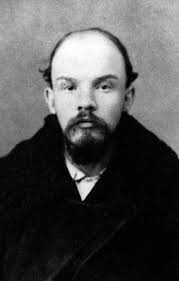
However, as civil war gripped the nascent Soviet nation, this policy was hurriedly dropped and the All-Russian Extraordinary Commission for Combating Counter-Revolution and Sabotage was created by a resolution of the Council of People’s Commissars on 20 December 1917. The Commission would ‘investigate and liquidate all counter-revolutionary activity and sabotage attempts and activities throughout Russia’ – and became known by its acronym: VChK, pronounced Vecheka and eventually shortened to Cheka. It was soon renamed – but the word Chekists, the name for its employees, is still sometimes used to describe the employees of the Russian security service today. [11] The offices of the Cheka opened at Gorokhovia 2 in St Petersburg and its opening hours were from 12 noon to 5pm.[12]
That first reorganisation did not last long. The GPU was renamed again in November 1923, after the creation of the USSR, when it became the Joint State Political Administration of the USSR, or OGPU USSR and this time the name remained until 1934, when the OGPU was subsumed into the People’s Commissariat for Internal Affairs: the NKVD under the leadership of G.G. Yagoda. As part of the NKVD, its official title became the Main Administration of State Security and its full acronym the rather lengthy: (GUGB) NKVD USSR. This situation lasted until 1941, when the NKVD was reorganized again, and this time the GUGB became the NKGB USSR.[13]
As well as these major restructurings, there were many smaller shifts and shake-ups over the years within the many smaller subdivisions of the OGPU and NKVD. To give a sense of how regular these reorganisations were, let us take the examples of two different areas of security: foreign intelligence and censorship of correspondence. Responsibility for foreign intelligence was switched between three different subdivisions in the period from December of 1936 to September 1938, with no less than three changes in the subdivision responsible for censoring letters from 1937 to 1938. This pattern of multiple reorganisations in the mid-1930s is seen by one historian as a hangover from the days of the Tsarist secret police which were beset with similar administrative upheavals.[15] Yet during these periods of turmoil – when accountability for major areas of security was passed around, each change requiring a new set of staff to deliver a particular type of intelligence – the Soviet security service was at the very heart of the great political and social repression that was taking place in the Soviet Union. It is useful therefore consider how far the Soviet leadership drove the process and how much impetus was also coming from within the security service itself.
An example from the years of the civil war (1917-1922) illustrates how the security services, and specifically its leader Felix Dzerzhinsky, took advantage of circumstances to extend the powers of the security services. A report from Dzerzhinsky about the state of Soviet society provoked the Council of People’s Commissars into passing the decree entitled ‘Decree on the Red Terror’ in September 1918. This decree, which lasted until 1922, cemented the act of terror against enemies of the Soviet state, but perhaps more important, from Dzerzhinksky’s point of view, was the benefit to the Vecheka itself in expanding its powers of summary justice. Here, Dzerzhinsky was effectively using his position to further bolster the power of the security service.
Certainly the Soviet leadership defined the direction for the security service during the late 1930s –setting both its objectives, and the legal parameters by which it could operate. This was done through orders and decisions made by the Soviet leadership: the Politburo (the Political Bureau of the Central Committee of the Communist Party of the Soviet Union), which was the supreme policy-making body of the Communist Party, as well as the Central Executive Committee, which was the highest legislative body and Sovnarkom (the Council of People’s Commissars).
Although much of the documentary evidence from within the Soviet security service is held in the FSB archive and therefore inaccessible, the documents that have been made public show the impact of the Soviet leadership on the workings of the OGPU/NKVD. Russian historians Kokurin and Petrov have included some of these documents in their rather comprehensively titled book ‘Lubianka: Organs of the VChK – OGPU – NKVD – HKGB – MGB – MVD – KGB. 1917-1991’. Out of seven documents set out in this volume for the year 1930, four are jointly from the Central Executive Committee and Sovnarkom, one is from the Politburo, and two are internal memos from Menzhinsky and Yagoda. While the two memos cover relatively minor issues– the prohibition of information about OGPU in the press and reform of the Counter-Reconnaissance and Eastern departments of OGPU – those from the party leadership cover major structural and legal issues: structural, operational and administrative functions, questions of leadership and major reorganisations (in this case, the liquidation of the People’s Commissariat for Foreign Affairs).[16]
Legal powers
It is also clear that the Soviet leadership had responsibility for the legal powers of the security services. At its creation, the Vecheka’s legal powers were both broad and somewhat imprecise, and during this early period ‘distinctions between common and political crimes, real and imaginary guilt grew blurred…’[17]. This haphazard legal framework led to inevitable miscarriages of justice: ‘At issue was always the danger of “excesses”. The lack of any check meant that large numbers of innocent people were being executed.’ [18]
During these early years of civil war and terror, it seems that it suited the Bolshevik leadership to have a political police force whose legal boundaries were flexible, to say the least. While the abolition of the Vecheka has been interpreted as a decision to clamp down on the extra-legal status of the security service during the relative calm of the era of the New Economic Policy, its replacement, the GPU was once again granted powers to exile, imprison and even carry out occasional executions in 1922. Furthermore, in 1923, a body known as the ‘judicial collegium’ was created as part of OGPU, with powers to carry out the trial and punishment of counter-revolutionaries, spies, and terrorists.[19]
When the OGPU was incorporated into the NKVD in 1934, once again there is clear evidence of a move to curtail the powers of the security services which were seen to have grown dangerously out of control. Documents show that measures were put in place to guarantee civilian oversight of the security services, in the person of the All-Union Procurator (similar to an attorney general). A commission was set up to examine the illegal methods used by the security services, and Stalin himself noted his concern about the situation.[20] However, throughout the 1930s, external factors seem to have overruled concerns about the operations of the security service. The rise of fascism in Germany, problems with agriculture and industrialisation and perhaps most pertinently the assassination of the Soviet politician, Kirov in 1934, created a tension over the reform of the security service so great that it ultimately overwhelmed any movement towards reform.
The NKVD and novelists
We know from documents now available that the security service was able to infiltrate the world of the Soviet novelist to a great extent. The aim was not to target particular writers but to collect information about as much of the artistic community as they possibly could, all meticulously written up into reports and passed back to the Soviet leadership. In this snippet from the ‘Dispatch from the First Section of the GUGB NKVD SSSR Secret Political Department on the moods of I.E. Babel in connection with the arrests of the former oppositionists’, written in 1936, Babel boasts about the likelihood of his own arrest:
‘Pirizhkova related that she asked Babel: “Can’t they arrest you?” To which Babel replied: “As long as the old man [Gorky] was alive, that was impossible. And now it’s still difficult.”’[21] This quote illustrates the level of detail that is typical of these reports.[22]
To feed this voracious appetite for intelligence, events at which large numbers of writers met were extremely useful for security service officers and informers. Indeed, the first Writers Congress, held in 1934, provided a rich seam of material for reports to the party elite about the mood of the conference, including large amounts of negative feedback. This quote from the writer M.M. Privshin is characteristic of the tone throughout the report: ‘I keep thinking how can I get out of here faster. The tedium is unbearable, but there are problems with leaving…’[23]
The security service also gathered the views of writers on other cultural matters, such as the controversy over Shostakovich’s opera Lady Macbeth of Mtsensk. One report from early 1936 details the thoughts of both Isaac Babel and Andrei Platonov on the subject of the ill-fated opera – here Platonov gives his opinion: ‘The play has been running for more than a year, after all, everyone has been praising it to the skies, and suddenly this anonymous sabotage. It’s clear that someone very high and mighty happened to stop by the theater, listened without understanding anything about music, and sabotaged it.’[24]
There are several caveats to bear in mind when reading these reports. As Vatulescu reminds us: ‘… the historian should hesitate before treating police reports as hard nuggets of irreducible reality, which he has only to mine out of the archives, sift, and piece together in order to create a solid reconstruction of the past.’[25] Therefore we must ask whether the information in the reports may have been edited in order to give a particular version of events to those who were reading the reports? And was the information there to support government policy or to help make policy? Furthermore, as well as these questions, there are questions about the reception of the intelligence by Stalin and the other party leaders. In their book on Soviet culture and power, Clark and Dobrenko come to the conclusion that there were plenty of writers who remained at liberty even though the security services had more than enough information to arrest them. For example, the poet Iosif Utkin is quoted in one report as saying: ‘The enemy could not cause as much evil as Stalin as done with his open trials…They declared democracy and parliamentarianism but at sessions of the Supreme Soviet not a single question has been raised about the mass disappearance of deputies and ministers…’[26] Stalin apparently knew of this, and other similar expressions of thought inimical to the regime, and yet they were never acted upon, no arrests were ever made. These puzzling contradictions will be examined in detail in chapters three and four.
While the Soviet security service was a massive institution with huge numbers of staff, it should also be noted it had numerous partner organisations, who helped further their aims in different spheres of society. One such institution was the Chief Administration of Literary and Publishing Affairs, known as Glavlit, which was set up in 1924, to oversee publishing and censorship matters. Furthermore, the security service had informers in many other organisations, including trade unions and factories. The reach of the security service beyond the Lubyanka and into Soviet society, will be discussed in detail in chapter two.
1.4 Aims and hypotheses
The main aim of this dissertation is to reach a clearer understanding of how the Soviet security service operated during the 1930s, the constraints on them, the demands made of them and the setbacks that they endured, in order to try and establish a more nuanced image of their role in Soviet society at this time.
The case study of the Soviet novelist reflects the hugely important role of novelists within Soviet culture: ‘In the 1930s, culture, and especially literature, became the Soviet secular surrogate for religion and central to the Soviet Union’s claim for international dominance’.[27] The focus is deliberately narrow – this is not a portrait of the whole organisation, nor a sweeping historical survey. It examines in close-up the work of the security service in relation to this one particular group, in order to extend the depth, rather than the breadth, of our understanding of the organisation, scrutinising the processes of that institution, and especially its inconsistencies. It allows us to see the security service afresh – as an organisation, made up of individuals, which although undoubtedly capable of mass terror, was also prone to confusion, to contradictory behaviour, and compromise.
Many histories of the Soviet security service resound with the noise of gunfire.[28] In fact, when reading these studies we can become blind to the violence that lies within them, as it becomes a commonplace. We can read reams of statistics, columns filled with four, five and six-figure numbers, with the debate over how many died in the Great Terror involving such high numbers as to be rendered almost meaningless. In focusing on a small segment of society, the aim is to keep the analysis on a human scale.
Great shifts have been made in the historiography of the Soviet Union over the past 50 years or so,[29] from totalitarian interpretations, to revisionist ideas, and beyond to transnationalism and other interpretations, as will be detailed in the literature review later on in this chapter. However, much of the literature on the Soviet security service produced in the West still seems slightly superficial and mired in the terminology of the totalitarian school.[30] This is not a criticism, as access to sources in the period in which most of these accounts were written was limited, as already discussed. Many of these books, in particular Robert Conquest’s study of the NKVD, are anchored in the disgust that historians felt on discovering the reality of the purges, and as such are riven with moral judgment. This is an understandable response, and should not be rejected. However, it does little to bring us any closer to why these events took place. Furthermore, most of the larger studies of the security services were written in the Cold War period, and doubtless the conditions of that time had a very great impact on historians in the West, even if it was perhaps partially unconscious. One historian has even suggested that scholars influenced by more recent schools of thought have ignored the security service, as their activities had too great a totalitarian element.[31]
In order to carry out this work, the following questions were asked. First, what were the methods used by the security service against novelists and why? This allows us to trace the process of decision-making within the security service. Secondly, what were the systems and structures by and through which the security services interacted with writers (such as the Writers Union and Glavlit)? This helps us to begin to appreciate the reach of the security service into Soviet society. Thirdly, how were these structures connected to the Central Committee, Politburo and to Stalin – a crucial question because it aims to establish where the true centre of power lay: within the security service or higher up in the Soviet regime? The final question to be asked is what were the security service’s weaknesses during this time, why were mistakes made and what do they tell us? In a literature that generally tends to portray the security service as omniscient, all-powerful and highly disciplined, the focus on mistakes provides us with a different framework with which to judge their activities.
In answering these questions, this dissertation will put forward the following broad hypotheses. The Soviet security service took a huge interest in the world of the Soviet novelist, underpinned by Stalin’s continual attention on all cultural matters. Yet in their surveillance of the community of Soviet novelists, the Soviet security service was not able to regulate the cultural output of novelists absolutely. Mistakes were made throughout the 1930s, and material was published that was not in harmony with the party line even at the very height of the terror. The reasons for this are complex, but they may include the high level of administrative reorganisations of the security services as well as staffing problems within other institutions, such as Glavlit. Furthermore it will be argued that while administrative and personnel problems were important, they can be seen as part of a wider situation within Soviet society in which, despite the best efforts of the Soviet leadership, the control of the Communist Party, its members and the security services themselves over society was not as total as some historians have portrayed it.
1.5 Structure of the dissertation
Chapter one of the dissertation examines the security service in detail, specifically the systems and structures that were used in the repression of novelists and what this can tell us about the way that the NKVD functioned. It aims to describe the decision-making process whereby the fate of individual writers was settled, allowing us to ascertain where the decision-making power lay within the organisation, and to explore how much the security service operated independently. It will show that the decision-making process was a precarious balance between various members of the security services, at a high level and further down the food chain. It will discuss how much influence Stalin, who was so greatly involved in matters of culture throughout the 1930s, had on each decision, and examine other personalities within the service and beyond who had independent decision-making powers.
This chapter will trace the process of arrest, which the evidence suggests was very complex. Each arrest was accompanied by a detailed analysis of the text that had been the motive for the arrest on the part of the NKVD agents. Throughout much of the literature the arrests of writers are described as ‘arbitrary’.[32] This chapter will ask if this is truly the case, whether this arbitrary approach could have been another tactic in the terror, and whether in fact it was truly as arbitrary as is suggested.
Chapter two maps the security service’s place within the broader Soviet system and vis-a-vis other groups. It demonstrates that it did not operate as a lone organization, relying as it did on its infiltration of other institutions to conduct its work. It sketches the landscape of these groups that operated between the NKVD and the community of Soviet writers including: the Committee on Arts Affairs, Kultprop, Glavlit, the State Publishing House for Literature, the Writers Union, and the Co-operative Organisation of State Publishing Houses. It also examines the role of various political personalities who were involved in the intersection between culture and the security services including: Platon Kerzhentsev, head of the Committee of Arts Affairs during the 1930s; Andrei Zhdanov, who had many connections to the world of culture during the 1930s, including giving a keynote speech at the First Writers Congress in 1934 as well as head of the Central Committee Directorate for Propaganda and Agitation from 1938; and Vladimir Stavsky , head of the Writers’ Union during the 1930s. It also charts the key authors to be dealt with in this study, and key publications. The aim of this mapping out of organisations and individuals is to show the intricacy of the relationships between the intelligence organisations and those they gathered intelligence about.
Chapter three examines the case studies of particular writers and their treatment by the NKVD. It begins by looking at the role of literature in Russia and the Soviet Union, described by several scholars as having a moral as well as aesthetic role throughout the 19th and 20th centuries.[33] It asks whether this was really the case, and examines the implications of such an assertion. It then compares the experiences of two groups of writers: those who were viewed as critical of the Soviet Union, whether or not they were arrested, and those writers who were considered to be the authors of key socialist realist novels, such as Sholokov, Krymov and Gorky. The contrast demonstrates that the boundaries between these two groups, in experiential terms, may not be as concrete as they seem in hindsight.
Chapter four will use a literary journal as a case study to demonstrate the oversights made by the security service and its network. The journal in question is Literaturnyi Kritik, a journal of literary criticism published between 1933-1940. It was published from the time of the early purges all the way through the Great Terror and beyond. However, despite this, it published work by Andrei Platonov at a time when other publications found it nigh on impossible to publish his work. It also defended the poet Anna Akhmatova at a time when other publications were silent about her work, and it openly discussed the problems of Soviet creativity and socialist realism. Somehow it seems to have ‘fallen off the radar’ of the security service. This section will examine how this happened, and ask whether this was a stand-alone instance of oversight, or whether any wider conclusions can be drawn from it about the workings of the Soviet security service.
The final chapter aims to draw together the evidence from this examination of operational detail of the Soviet security service, as well as the case studies of the novelists and the journal Literturnyi kritik, in order to come to some conclusions about the Soviet security service. It returns to the discussion opened in chapter one about the nature of the security service, and the factors that drove the actions of those working for it, both within the institution itself and in the wider field of Soviet society. It will also return to ideas from the field of intelligence studies and try to establish what this field can teach us about the domestic activities of the Soviet security service.
The timeframe of this study is the 1930s, which it could be argued was the defining decade of the Stalinist terror. Therefore, in any history of the security services it cannot be ignored. However, the starting point is not 1 January 1930. Rather the starting point is taken to be Stalin’s Great Break, when the Soviet leader purportedly turned his back on some of the most significant policies of the 1920s, such as the New Economic Policy (NEP), which had allowed for some private enterprise. We take this starting point in order to set the context for what followed in the 1930s.
1.6 Methodology
The methodology employed here is essentially a historical examination of the evolution of the security service over a decade. It combines influences from both Soviet revisionist historians and, to an extent, from those in the totalitarian school, in order to formulate new questions about the role of the Soviet security service in the 1930s. Central to this approach is to establish whether the revisionist paradigm may be applied to the practices and actions of the security service in the 1930s. Whether or not this was the case is determined through a multi-archival examination of primary sources, underpinned by an interrogation of these sources. This includes an examination of the omissions in the archival record – what is available, what is not and why. It looks at why particular statements are being made in the documents that are available, and questions who they were written for in the first instance.
At this point, it is worth noting that there are very specific methodological considerations for historians writing about any security service, whether it is the Soviet security services, the CIA or MI5, which is that by their very nature these organisations work very hard to keep much of their activity secret:
‘Limited access to primary sources and a general lack of information in this field mean that researchers – just like policy-makers and intelligence overseers – are often faced with the challenge of incompleteness.’[34] However, as we will see in the literature review, just as the Soviet security service itself is more complex than it might seem, so the sources and documents available about them can be found in a wider variety of locations than we might at first think.
The field of intelligence studies provides a second device with which to examine the workings of the security services. It presents us with a number of questions about what drives the collection of intelligence, what it might be used for, and the rationale behind the whole process. It is hoped that these approaches allow us to shed new light on sources that have already been analysed by historians, as well as asking pertinent questions of documents that may not have been available previously.
Literature review
As noted toward the beginning of this chapter, each new generation of historians of the Soviet Union have put forward widely differing arguments in an attempt to analyse the events of the 1930s. This has bestowed upon the field a rich and vigorous historiography, and there exist several excellent summaries of the evolution of the different schools of interpretation of the Soviet 1930s.[35] To briefly outline these developments, we can take as our starting point the moment when historians began to reject explanations of the ‘totalitarian’ model of Stalinism, which sought to find the similarities between Stalinism and other dictatorial regimes. In J. Arch Getty’s rendering, the totalitarian interpretation of life in the Soviet Union can be described as follows: ‘a nonpluralist, hierarchical dictatorship in which command authority existed only at the top of the pyramid of political power. Ideology and violence were the monopolies of the ruling elite, which passed its order down a pseudo-military chain of command whose discipline was the product of Leninist prescriptions on party organization and Stalinist enforcement of these norms… Major policy articulation and implementation involved the actualization of Stalin’s ideas, whims, and plans, which in turn flowed from his psychological condition.’[36]
Historians such as Sheila Fitzpatrick who first put forward an alternative to this view, became known as the ‘revisionists’. They began to look at Soviet society using the perspective of social historians, and sought to find more complex explanations for social change. By focusing on the lives of Soviet citizens, these historians started to turn perceptions of the Stalinist period upside down: ‘In contrast to those Western scholars, following Trotsky and Isaac Deutscher, who argued that the erosion of the working class was key to the eventual evolution of the Bolshevik regime from the dictatorship of the proletariat to a dictatorship of the bureaucracy, Fitzpatrick contended that the real meaning of the revolution was the coming to power of former workers who occupied the key party and state positions in significant numbers.’[37]
More recently scholars such as Kotkin go as far as to suggest that the key to understanding Stalinist society is not finding the similarities with other dictatorships, but with other modern states, proposing: ‘that Stalinist civilization ought to be regarded as a non-capitalist form of European modernity, rather than a despotic clique ruling over a captive society.’[38]
The ideas of the revisionists were applied to many aspects of Stalinist society from the Communist Party to the Great Terror and to studies of local areas of the Soviet Union. Writing about the chain of command within the Communist Party, Getty notes: ‘According to most Western views, power was transmitted from the top to the bottom, from the center to the localities. Commands originated in the Central Committee (or its Secretariat) and were passed down through the national parties, territories, regions, and districts to the cells… The political reality was much different. In fact, the chain of command collapsed far more often than it functioned.’[39] [emphasis added]
However, when it comes to analysis of the security service, more recent aspects of scholarly debate, including the revisionist approach, are less apparent: there is less discussion of loss of control, of collapse, of mistakes, of weakness. One historian even goes so far as to suggest that the move away from the totalitarian view of the Soviet Union has contributed to the lack of research taking place in the field of the Soviet security services: ‘The apparent reason for this absence of research lies in the fact that the security police has long been identified with the totalitarian aspects of the Soviet system. During the past… decades Western scholars have abandoned the totalitarian model of Soviet politics that was developed in the 1950s and have turned to other explanations of how the Soviet system works… Underlying this change of emphasis has been an effort to stress the more rational aspects of Soviet society and the ways in which it resembles Western societies. Not surprisingly, the Soviet security police lost its appeal as a subject of research…’[40]
However, a study of the available documents concerning the security service and their surveillance and treatment of writers shows us that they were not immune from these phenomena. It was an organization made up of individuals, and in its attempts to regulate the world of Soviet culture it made mistakes, left gaps and suffered from problems with personnel, administration and bureaucratic confusion. Let us now turn to these documents, in order to begin to see how they demonstrate this under-explored side of the security service.
Primary sources
The primary sources used are divided into two broad categories, those that relate to the security service and those that relate to Soviet writers. Of greatest importance in the first group are the documents from state archives that contain information about the security service. The FSB archive, in which is held the vast majority of the documents relating to the security service, remains closed. However, thanks to the formidable bureaucratic efforts of the Soviet leadership, there is a great deal of material on intelligence matters to be found in other archives. As Getty explains: ‘The directors of the terror machine were unashamed and unafraid of a negative historical verdict. They recorded and documented almost everything they did… What used to be a paucity of sources has become an embarrassment of riches… [as]… more and more archival documents have come to light in the ongoing process of documentary declassification in the former Soviet Union.’[41]
The ‘Fond’ or collection of documents held in the Russian State Archive of Contemporary History, or RGANI, entitled Fond 89 was especially useful.[42] Historians would do well to note the reason for the creation of this Fond, which is composed of documents taken from other state archives, including the FSB archive. It was produced in the early 1990s, when President Yeltsin decided to make the Communist Party illegal, and it is dedicated to proving that: ‘the Communist Party of the Soviet Union showed a complete disregard for human rights and international law.’[43]
However, despite the highly political conditions of the creation of this Fond, which is vast in both timescale and range of subjects, there is some useful material on both the Soviet security service and the purges of the 1930s. The majority of the documents relating to events in the 1930s can be found in Opis 73, including a document entitled ‘Internal list of documents included in the file USSR NKVD: Structure, Status, and Work, opened on May 1, 1936 and closed on September 2, 1939 1936 May 1 – 1939 September 2’ (Opis 73, Reel 1.1011, File 8), as well as many Politburo resolutions with the heading ‘Concerning Anti-Soviet Elements’. A large chunk of material from the archives of the NKVD RSFSR is held at GA RF (Fond 393), with the added convenience that many of the files are listed in English on the Hoover Institution website.[44] Material from this archive is also held at the British Library.
However, while there is a great deal about many aspects of the NKVD during the 1930s in this fond, there is very little to do with their dealings with the novelists. This fond is more useful for examining the ‘systems’ aspect of the security services. For locating documents about Russian writers, the Russian State Archive of Literature and Arts, RGALI for short, made an excellent starting point. The archive has a whole Fond on the Writers Union (f.631: The Writers Union of the USSR, Moscow, 1932-1991) as well as several documents from Glavlit’s archive (see especially f. 122 inv. 2 doc. 35). The Glavlit archive is held at GA RF, fond 9425. This contains material from 1922, although unfortunately much of the material from the 1930s has been lost.
RGALI also holds valuable examples of how the policies of Glavlit were implemented, such as the correspondence of the “Posrednik” co-operative publishing house with Glavlit, regarding editorial and publishing plans and the limiting of the publishing house to theoretical pedagogic literature. RGALI holds papers relating to many writers, including Platonov, Bulgakov, Ehrenburg and Konstantin Simonov, which were all extremely useful.[45] There are also several important books of documents which were extremely valuable for this project, including from the ‘Annals of Communism’ series Vlast i khudozhestvennia, The Road to Terror, and various books of letters written by Stalin to Molotov, Kaganovich and Dimitrov. The memoirs of many writers and politicians offered useful detail and personal reflection on the times, as were reports from newspapers of the time. Two online archive projects also proved to be hugely useful: the first is the Stalin Digital Archive which has published a vast amount of Stalin’s own correspondence and other related material; the second is the website, prozhito.org which is an online repository of Russian and Soviet diaries from the 20th century.
Many of the documents about the NKVD and Soviet novelists come from state archives holding collections of government documents. However it was also important to this project to look at material from non-government archives. The impetus to use documents from non-government archives came specifically from a suggestion in Clark and Dobrenko’s Soviet Culture and Power, in which they suggest using material from archives such as creative unions and publishing houses in order to supplement the government documents published in their book.[46] This allows us to compare the version of events in the accounts of the non-governmental organisations with the ones in the official state archives. While a good proportion of the huge amount of documents available from the state archives have been used by other historians, both western and Russian, the files from these non-governmental archives have not been so widely accessed.
One such archive isthe former Central Archive of the City of Moscow or TsGA Moskvy. This archive holds records of trade unions in Moscow including the creative trade unions. It also holds the main body of records of agencies administering Moscow cultural affairs, such as the Administration for Publishing and Book Distribution of the Moscow City Executive Committee and the Committee on Cultural of the Government of Moscow. It holds records of cultural divisions of ‘raion’ executive committees (website: http://cgamos.ru/storage_centers/28615/). The State Archive of Historico-Political Records of Moscow also holds some records from trade unions archives, although it was only set up in 2011 and as of 2013 was still in the process of formation. Furthermore, while the journal that I use as a case study, Literaturnyi Kritik, is mentioned in passing in a small number of scholarly works,[47] more in-depth analysis of its activity over the entirety of the seven years in which it was published has not so far been carried out.
Secondary sources
For anyone wanting to understand the structure and the systems of the security service, a good place to start is Kokurin and Petrov’s work Lubianka, Organii VChK – OGPU – NKVD – MGB – MVD – KGB 1917-1991. This indispensible guide maps every administrative shift within the security services, changes in personnel, accompanied by commentary and nearly 200 documents on different aspects of the running of the security services. Many of these documents are from the FSB archive itself.
Another key text in Russian is Petrov and Skorin’s study entitled Kto Rukovodil NKVD 1934-1941: Spravochnik, (Who Controlled the NKVD 1934-1941: A Directory), which goes into more biographical detail about those men leading the NKVD. Petrov argues that without a clear understanding of the chekhist nomenclatura it is impossible to understand the activities of the security services.[48] Again, the value of this work is the level of detail contained in it. Another useful text on the structure and systems is Istoriia Sovetskikh Organov Gosudarstvennoi Bezopasnosti: Uchebnik (The History of the Soviet Organs of State Security: A Textbook). This handbook, which was written in the 1970s solely for employees of the security services, is still not available to the general public in Russia today. It was smuggled out of Latvia in the 1990s, and provides a unique analysis of the history of the organization.
By contrast, much of the existing literature in English on the NKVD lacks this forensic detail, understandably in the case of studies completed before the archives were opened in the wake of the collapse of the Soviet Union. However, this is not to discount the usefulness or relevance of these works, which provide a solid background as well as revealing much about the interpretations of historians in the Cold War era. Robert Conquest’s book Inside Stalin’s Secret Police: NKVD Politics 1935-1939, written in the 1980s, remains one of the few books on the security services to focus solely on this short period. Conquest describes the security services as the ‘lever’ by which Stalin was able to move the world.[49] And he is not the only historian to cast the security services in this central role. Writing as early as 1925, Popoff describes the Cheka as overseeing ‘a reign of terror of the bloodiest kind in Russia’.[50] Duhamel suggests that the NKVD was so powerful during the 1930s that it ‘virtually supplanted’ the Communist Party,[51] while Knight explains that the NKVD habitually broke the law to achieve its ends.[52] In examining the reasons for the existence of the NKVD, Richelson describes the aim as ‘total conformity’ among the Soviet population.[53] Andrew describes domestic Soviet intelligence as ‘an unprecedented system of surveillance able to monitor and suppress all forms of dissent’.[54]
Of the English language books on the security service written after the demise of the Soviet Union, a handful stand out. The first of these is The Road to Terror by J. Arch Getty and Oleg Naumov, which combines depth of analysis with previously unpublished documents, many relating to the reorganisation and activities of the security services. Another useful volume is Clark and Dobrenko’s Soviet Culture and Power: A History in Documents 1917-1953. Again, as the title suggests, this is a compilation of documents relating to the crossroads between the Soviet leadership and the world of culture, accompanied by a useful commentary. Further recent additions include Shearer and Khaustov’s Stalin and the Lubianka: A Documentary History of the Political Police and Security Organs in the USSR, 1922-1953, again another books of documents taking the relationship between Stalin and the security service as its central theme, and also Harris’s book The Great Fear: Stalin’s Terror of the 1930s.
Perhaps the most important book for anyone wanting to find out about the Soviet intelligentsia and the intelligence service is Shentalinsky’s The KGB’s Literary Archive. Researched during the era of perestroika when Shentalinsky worked as Chairman of the Committee for Literary Heritage and published in the early 1990s, the book sets out in print the security files of several well-known Soviet authors, including Isaac Babel, Mikhail Bulgakov and Andrei Platonov. Although this book is essential reading, it only goes so far, as it concentrates on a group of the most well-known writers, and does not examine the process of their arrests, but rather documents what happened to them during their interrogations. What is most striking about this book is the sophisticated level of discussion that took place during interrogations of writers. It was by no means simply a case of persuading the author in question to sign a false confession admitting that he was a spy. Each piece of writing is analysed in a manner more reminiscent of a literature seminar than a secret police investigation.
Vatulescu’s book Police Aesthetics does an excellent job of unpacking the meaning of the evidence that Shentalinsky lays before us. It examines the relationship between writers, filmmakers and the security organs, and particularly concentrates on the impact that the security organs had on the creative process of Soviet artists. Vatulescu argues that just as Bulgakov had once worked for the Cheka as an editor, so the creative channels between writers and the security service ran in both directions. Thus Vatulescu characterises the file of each police suspect, not as a dry government document or piece of evidence, but as a ‘peculiar biography’.[55]
Furthermore, she goes on to argue that the impact of the secret police on the writing of Bulgakov was so great that the writer consciously mimics the voice of a Chekist in the narration of the novel: ‘The enigmatic narrator of The Master and Margarita is a mask designed to double as a shield protecting the vulnerable author by mimicking his threatening adversary, a secret police agent.’[56]
Indeed, the patchwork nature of the narration of the book is, in Vatulescu’s eyes, reminiscent of the file of the police suspect with its scrapbook selection of different sources: ‘Our narrator’s eye seems all-seeing, but examined up close his vision appears more like the careful collation of imperfect observations made by eavesdroppers, passers-by, and bookkeepers, all very likely to be informers.’[57] She even goes so far as to suggest a comparison between the novel and Bulgakov’s own personal file: ‘An examination of the The Master and Margarita next to Bulgakov’s own file, passed from the Cheka to the KGB, shows an uncanny similarity in the organization of the narratives.’[58]
Although Vatulescu acknowledges that the scope of the terror was enormous, quoting Yezhov’s 1937 order to arrest approximately 200,000 people in four months, like Shentalinsky she concentrates on a small number of well-known Soviet writers, and gives much of her attention to Mikhail Bulgakov. She contrasts these examples with writers and filmmakers from Romania.
Vatulescu states early on in her book that she wishes to ‘move beyond the cold-war binary oppositions between repressive states and subversive artists…’[59] This viewpoint is enlarged in Katerina Clark’s fascinating research on Moscow’s cultural life during the 1930s, particularly her book about Moscow in the 1930s: Moscow – The Fourth Rome: Stalinism, Cosmopolitanism and the Evolution of Soviet Culture 1931-1941.[60] This book highlights the paradox of Moscow in the 1930s in the Soviet Union, at once a place where travel to the West was becoming more difficult but cultural exchange between the USSR and the West was actually growing.[61]
There is a great deal more valuable research on the role of culture in Soviet society, Fitzpatrick has looked in great depth at the connection between Soviet culture and power, describing the Soviet world of culture as nothing less than ‘one of the primary spheres of revolutionary contestation, like politics or economics’.[62] Her argument on the role of culture, and her analysis of intellectuals as an elite group in competition with other Soviet elites is compelling. Here her argument on culture and intellectuals takes an interesting turn from the received version in which dissident authors are usually painted as saintly or superhuman: ‘Soviet intellectuals, in her [Fitzpatrick’s] rendering, are… all too human: rarely martyrs, as often participants in persecution as victims of it, given to self-aggrandizement, vanity, and envy, always angling for material perquisites, status, and authority, while simultaneously representing themselves as unsullied by politics or material concerns… Above all, Fitzpatrick took a sceptical attitude to the idea, held fiercely by the intellectuals of the 1920s and 1930s, of the intelligentsia’s special capacity for self-sacrifice on behalf of knowledge, art, the good of “the people” and other cultural values.’[63] This approach, the seeking out of human characteristics within the intelligentsia and within the intelligence services, will be central to this study. Works such as Benjamin Tromly’s book on the Soviet intelligentsia in the world of the university provided some very interesting comparisons to the world of writers.
There are many more excellent histories of the 1930s that look at the role of intellectuals, including Kotkin and Getty. Vladimir Shlapentokh’s work on Soviet intellectuals is full of detail, yet perhaps Shlapentokh himself draws attention to the shortcomings of the book by identifying himself as a member of the ‘Soviet liberal intelligentsia’ and by taking occasional sideswipes at other Soviet writers who ‘merely imitate creative work’.[64] However, aside from the books of Vatulescu and Shentalinsky, none of these studies take as their main focus the intersection between the novelists and the security services.
We cannot begin to understand the complex relationship between the security service and Soviet novelists, however, until we have understood how the security service worked during the 1930s, and how that work differed from what had taken place during the 1920s. This question is explored in the next chapter along with an analysis of how ideas from the field of intelligence studies can help us to understand this work.
Possible new focus for introduction:
It has been thought the political police of the Soviet Union under Stalin, known as the OGPU and later as the NKVD was simply too totalitarian to be included in the revisionist view of the Great Terror. Theywere too simple, they were too successful, they were just too good at what they did to be useful to a revisionist historian, wanting to get away from the clichés of Stalin as puppet-master – a view most clearly put forward by Sheila Fitzpatrick.
This study will demonstrate that Fitzpatrick was certainly correct in the finding that the political police were exceptionally successful, efficient and ruthless in their actions throughout this 1930s. However, it will also go on to demonstrate that all this does not signify that the organisation was free of the complexity that Fitzpatrick and her colleagues have identified in so many other aspects of Soviet society. While it was a highly effective organisation, it was not well run, but prone to chaos, and to wasteful bureaucracy and high levels of upheaval. The effect that this had on the purges that characterized much of the 1930s, and the Great Terror of the mid-late 1930s, is a key topic that will be explored throughout this study.
umstances to extend the powers of the security services. A report from Dzerzhinsky about the state of Soviet society provoked the Council of People’s Commissars into passing the decree entitled ‘Decree on the Red Terror’. This decree cemented the act of terror against enemies of the Soviet state, but perhaps more importantly from Dzerzhinksky’s point of view, it was of benefit to the Vecheka itself, as it resulted in the expansion of the Vecheka’s powers of summary justice. Here, Dzerzhinsky was effectively using his position to further bolster the power of the security service.
However, it is also clear that the Soviet leadership defined the direction for the security service, in terms of both setting its objectives, and the legal parameters by which it could operate. This was done through orders and decisions made by the Soviet leadership: the Politburo (the Political Bureau of the Central Committee of the Communist Party of the Soviet Union), which was the supreme policy-making body of the Communist Party, as well as the Central Executive Committee, which was the highest legislative body and Sovnarkom (the Council of People’s Commissars).
Although much of the documentary evidence from within the Soviet security service is still in the FSB archive, and therefore inaccessible, a glance at the documents that have been made public allows us to see the impact of the Soviet leadership on the workings of the OGPU/NKVD. Russian historians Kokurin and Petrov have been allowed access to some of these documents, a selection of which are published in their rather comprehensively titled book ‘Lubianka: Organs of the VChK – OGPU – NKVD – HKGB – MGB – MVD – KGB. 1917-1991’. Examining the documents set out in this volume for the year 1930, out of seven documents, four are jointly from the Central Executive Committee and Sovnarkom, one is from the Politburo, and two are internal memos from Menzhinsky and Yagoda. While the two memos cover relatively minor issues – the prohibition of information about OGPU in the press and reform of the Counter-Reconnaissance and Eastern departments of OGPU – the ones from the party leadership cover major structural and legal issues: structural, operational and administrative functions, questions of leadership and major reorganisations (in this case, the liquidation of the People’s Commissariat for Foreign Affairs).[16]
Legal powers
As to the legal powers of the Soviet security service, it is clear that the Soviet leadership had responsibility for this as well. At its creation, the Vecheka’s legal powers were both broad and somewhat imprecise, and during this early period ‘distinctions between common and political crimes, real and imaginary guilt grew blurred…’[17] This haphazard legal framework led to inevitable miscarriages of justice: ‘At issue was always the danger of “excesses”. The lack of any check meant that large numbers of innocent people were being executed.’ [18]
During these early years of civil war and terror, it seems that it suited the Bolshevik leadership to have a political police force whose legal boundaries were flexible, to say the least. While the abolition of the Vecheka has been interpreted as a decision to clamp down on the extralegal status of the security service during the relative calm of the era of the New Economic Policy, in 1922 the GPU were once again granted powers to exile, imprison and even carry out occasional executions. Furthermore, in 1923, a body known as the ‘judicial collegium’ was created, with powers to carry out the trail and punishment of counter-revolutionaries, spies, and terrorists and this body was attached to the OGPU.[19]
When the OGPU was abolished and incorporated into the NKVD in 1934, once again there is clear evidence of a move to curtail the powers of the security services, which were seen to have grown dangerously out of control. Documents show that measures were put in place to guarantee civilian oversight of the security services, in the person of the All-Union Procurator (similar to an attorney general). A commission was set up to examine the illegal methods used by the security services, and Stalin himself noted his concern about the situation.[20] However, throughout the 1930s, external factors seem to have overruled concerns about the operations of the security service. The rise of fascism in Germany, problems with agriculture and industrialization and perhaps most pertinently the assassination of Kirov, created a tension over the reform of the security service so great that it ultimately overwhelmed any movement towards reform.
The NKVD and novelists
We know from documents now available that the security service was able to infiltrate the world of the Soviet novelist to a great extent. They did not target one particular writer or another but simply tried to collect information about as much of the artistic community as they possibly could, all meticulously written up into reports and passed back to the Soviet leadership. In this snippet from the ‘Dispatch from the First Section of the GUGB NKVD SSSR Secret Political Department on the moods of I.E. Babel in connection with the arrests of the former oppositionists’, written in 1936, Babel boasts about the likelihood of his own arrest:
‘Pirizhkova related that she asked Babel: “Can’t they arrest you?” To which Babel replied: “As long as the old man [Gorky] was alive, that was impossible. And now it’s still difficult.”’[21] This quote illustrates the level of detail that is typical of these reports.[22]
To feed this voracious appetite for intelligence, events at which large numbers of writers met were extremely useful for security service officers and informers. Indeed, the first Writers Congress, held in 1934, provided a rich seam of material for reports to the party elite about the mood of the conference, including large amounts of negative feedback. This quote from the writer M.M. Privshin is characteristic of the tone throughout the report: ‘I keep thinking how can I get out of here faster. The tedium is unbearable, but there are problems with leaving…’[23]
The security service also gathered the views of writers on other cultural matters, such as the controversy over Shostakovich’s opera Lady Macbeth of Mtsensk. One report from early 1936 details the thoughts of both Isaac Babel and Andrei Platonov on the subject of the ill-fated opera – here Platonov gives his opinion: ‘The play has been running for more than a year, after all, everyone has been praising it to the skies, and suddenly this anonymous sabotage. It’s clear that someone very high and mighty happened to stop by the theater, listened without understanding anything about music, and sabotaged it.’[24]
There are several caveats to bear in mind when reading these reports. As Vatulescu reminds us: ‘… the historian should hesitate before treating police reports as hard nuggets of irreducible reality, which he has only to mine out of the archives, sift, and piece together in order to create a solid reconstruction of the past.’[25] Therefore we must ask whether the information in the reports may have been edited in order to give a particular version of events to those who were reading the reports? And was the information there to support government policy, or to help make policy? Furthermore, as well as these questions, there are questions about the reception of the intelligence by Stalin and the other party leaders. In their book on Soviet culture and power, Clark and Dobrenko come to the conclusion that there were plenty of writers who had given the security services more than enough information to arrest them. For example, the poet Iosif Utkin is quoted in one report as saying: ‘The enemy could not cause as much evil as Stalin as done with his open trials…They declared democracy and parliamentarianism but at sessions of the Supreme Soviet not a single question has been raised about the mass disappearance of deputies and ministers…’[26] Stalin apparently knew of this, and other similar expressions of thought inimical to the regime, and yet they were never acted upon, no arrests were ever made. These puzzling contradictions will be examined in detail in chapters three and four.
While the Soviet security service was a massive institution with huge numbers of staff, it should also be noted it had numerous partner organisations, who helped further their aims in different spheres of society. One such institution was the Chief Administration of Literary and Publishing Affairs, known as Glavlit, which was set up in 1924, to oversee publishing and censorship matters. Furthermore, the security service had informers in many other organisations, including trade unions and factories. The reach of the security service beyond the Lubyanka and into Soviet society, will be discussed in detail in chapter two.
1.4 Aims and hypotheses
The main aim of this dissertation is to reach a clearer understanding of how the Soviet security service operated during the 1930s, the constraints on them, the demands made of them and the setbacks that they endured, in order to try and establish a more nuanced image of their role in Soviet society at this time.
The case study of the Soviet novelist reflects the hugely important role of novelists within Soviet culture: ‘In the 1930s, culture, and especially literature, became the Soviet secular surrogate for religion and central to the Soviet Union’s claim for international dominance’.[27] The focus is deliberately narrow – this is not a portrait of the whole organisation, nor a sweeping historical survey. It examines in close-up the work of the security service in relation to this one particular group, in order to extend the depth, rather than the breadth, of our understanding of the organisation, scrutinising the processes of that institution, and especially its inconsistencies. It allows us to see the security service afresh – as an organisation, made up of individuals, which although undoubtedly capable of mass terror, was also prone to confusion, to contradictory behaviour, and compromise.
Many histories of the Soviet security service resound with the noise of gunfire.[28] In fact, when reading these studies we can become blind to the violence that lies within them, as it becomes a commonplace. We can read reams of statistics, columns filled with four, five and six-figure numbers, with the debate over how many died in the Great Terror involving such high numbers as to be rendered almost meaningless. In focusing on a small segment of society, the aim is to keep the analysis on a human scale.
Great shifts have been made in the historiography of the Soviet Union over the past 50 years or so,[29] from totalitarian interpretations, to revisionist ideas, and beyond to transnationalism and other interpretations, as will be detailed in the literature review later on in this chapter. However, much of the literature on the Soviet security service produced in the West still seems slightly superficial and mired in the terminology of the totalitarian school.[30] This is not a criticism, as access to sources in the period in which most of these accounts were written was limited, as already discussed. Many of these books, in particular Robert Conquest’s study of the NKVD, are anchored in the disgust that historians felt on discovering the reality of the purges, and as such are riven with moral judgment. This is an understandable response, and should not be rejected. However, it does little to bring us any closer to why these events took place. Furthermore, most of the larger studies of the security services were written in the Cold War period, and doubtless the conditions of that time had a very great impact on historians in the West, even if it was perhaps partially unconscious. One historian has even suggested that scholars influenced by more recent schools of thought have ignored the security service, as their activities had too great a totalitarian element.[31]
In order to carry out this work, the following questions were asked. First, what were the methods used by the security service against novelists and why? This allows us to trace the process of decision-making within the security service. Secondly, what were the systems and structures by and through which the security services interacted with writers (such as the Writers Union and Glavlit)? This helps us to begin to appreciate the reach of the security service into Soviet society. Thirdly, how were these structures connected to the Central Committee, Politburo and to Stalin – a crucial question because it aims to establish where the true centre of power lay: within the security service or higher up in the Soviet regime? The final question to be asked is what were the security service’s weaknesses during this time, why were mistakes made and what do they tell us? In a literature that generally tends to portray the security service as omniscient, all-powerful and highly disciplined, the focus on mistakes provides us with a different framework with which to judge their activities.
In answering these questions, this dissertation will put forward the following broad hypotheses. The Soviet security service took a huge interest in the world of the Soviet novelist, underpinned by Stalin’s continual attention on all cultural matters. Yet in their surveillance of the community of Soviet novelists, the Soviet security service was not able to regulate the cultural output of novelists absolutely. Mistakes were made throughout the 1930s, and material was published that was not in harmony with the party line even at the very height of the terror. The reasons for this are complex, but they may include the high level of administrative reorganisations of the security services as well as staffing problems within other institutions, such as Glavlit. Furthermore it will be argued that while administrative and personnel problems were important, they can be seen as part of a wider situation within Soviet society in which, despite the best efforts of the Soviet leadership, the control of the Communist Party, its members and the security services themselves over society was not as total as some historians have portrayed it.
1.5 Structure of the dissertation
Chapter one of the dissertation examines the security service in detail, specifically the systems and structures that were used in the repression of novelists and what this can tell us about the way that the NKVD functioned. It aims to describe the decision-making process whereby the fate of individual writers was settled, allowing us to ascertain where the decision-making power lay within the organisation, and to explore how much the security service operated independently. It will show that the decision-making process was a precarious balance between various members of the security services, at a high level and further down the food chain. It will discuss how much influence Stalin, who was so greatly involved in matters of culture throughout the 1930s, had on each decision, and examine other personalities within the service and beyond who had independent decision-making powers.
This chapter will trace the process of arrest, which the evidence suggests was very complex. Each arrest was accompanied by a detailed analysis of the text that had been the motive for the arrest on the part of the NKVD agents. Throughout much of the literature the arrests of writers are described as ‘arbitrary’.[32] This chapter will ask if this is truly the case, whether this arbitrary approach could have been another tactic in the terror, and whether in fact it was truly as arbitrary as is suggested.
Chapter two maps the security service’s place within the broader Soviet system and vis-a-vis other groups. It demonstrates that it did not operate as a lone organization, relying as it did on its infiltration of other institutions to conduct its work. It sketches the landscape of these groups that operated between the NKVD and the community of Soviet writers including: the Committee on Arts Affairs, Kultprop, Glavlit, the State Publishing House for Literature, the Writers Union, and the Co-operative Organisation of State Publishing Houses. It also examines the role of various political personalities who were involved in the intersection between culture and the security services including: Platon Kerzhentsev, head of the Committee of Arts Affairs during the 1930s; Andrei Zhdanov, who had many connections to the world of culture during the 1930s, including giving a keynote speech at the First Writers Congress in 1934 as well as head of the Central Committee Directorate for Propaganda and Agitation from 1938; and Vladimir Stavsky , head of the Writers’ Union during the 1930s. It also charts the key authors to be dealt with in this study, and key publications. The aim of this mapping out of organisations and individuals is to show the intricacy of the relationships between the intelligence organisations and those they gathered intelligence about.
Chapter three examines the case studies of particular writers and their treatment by the NKVD. It begins by looking at the role of literature in Russia and the Soviet Union, described by several scholars as having a moral as well as aesthetic role throughout the 19th and 20th centuries.[33] It asks whether this was really the case, and examines the implications of such an assertion. It then compares the experiences of two groups of writers: those who were viewed as critical of the Soviet Union, whether or not they were arrested, and those writers who were considered to be the authors of key socialist realist novels, such as Sholokov, Krymov and Gorky. The contrast demonstrates that the boundaries between these two groups, in experiential terms, may not be as concrete as they seem in hindsight.
Chapter four will use a literary journal as a case study to demonstrate the oversights made by the security service and its network. The journal in question is Literaturnyi Kritik, a journal of literary criticism published between 1933-1940. It was published from the time of the early purges all the way through the Great Terror and beyond. However, despite this, it published work by Andrei Platonov at a time when other publications found it nigh on impossible to publish his work. It also defended the poet Anna Akhmatova at a time when other publications were silent about her work, and it openly discussed the problems of Soviet creativity and socialist realism. Somehow it seems to have ‘fallen off the radar’ of the security service. This section will examine how this happened, and ask whether this was a stand-alone instance of oversight, or whether any wider conclusions can be drawn from it about the workings of the Soviet security service.
The final chapter aims to draw together the evidence from this examination of operational detail of the Soviet security service, as well as the case studies of the novelists and the journal Literturnyi kritik, in order to come to some conclusions about the Soviet security service. It returns to the discussion opened in chapter one about the nature of the security service, and the factors that drove the actions of those working for it, both within the institution itself and in the wider field of Soviet society. It will also return to ideas from the field of intelligence studies and try to establish what this field can teach us about the domestic activities of the Soviet security service.
The timeframe of this study is the 1930s, which it could be argued was the defining decade of the Stalinist terror. Therefore, in any history of the security services it cannot be ignored. However, the starting point is not 1 January 1930. Rather the starting point is taken to be Stalin’s Great Break, when the Soviet leader purportedly turned his back on some of the most significant policies of the 1920s, such as the New Economic Policy (NEP), which had allowed for some private enterprise. We take this starting point in order to set the context for what followed in the 1930s.
1.6 Methodology
The methodology employed here is essentially a historical examination of the evolution of the security service over a decade. It combines influences from both Soviet revisionist historians and, to an extent, from those in the totalitarian school, in order to formulate new questions about the role of the Soviet security service in the 1930s. Central to this approach is to establish whether the revisionist paradigm may be applied to the practices and actions of the security service in the 1930s. Whether or not this was the case is determined through a multi-archival examination of primary sources, underpinned by an interrogation of these sources. This includes an examination of the omissions in the archival record – what is available, what is not and why. It looks at why particular statements are being made in the documents that are available, and questions who they were written for in the first instance.
At this point, it is worth noting that there are very specific methodological considerations for historians writing about any security service, whether it is the Soviet security services, the CIA or MI5, which is that by their very nature these organisations work very hard to keep much of their activity secret:
‘Limited access to primary sources and a general lack of information in this field mean that researchers – just like policy-makers and intelligence overseers – are often faced with the challenge of incompleteness.’[34] However, as we will see in the literature review, just as the Soviet security service itself is more complex than it might seem, so the sources and documents available about them can be found in a wider variety of locations than we might at first think.
The field of intelligence studies provides a second device with which to examine the workings of the security services. It presents us with a number of questions about what drives the collection of intelligence, what it might be used for, and the rationale behind the whole process. It is hoped that these approaches allow us to shed new light on sources that have already been analysed by historians, as well as asking pertinent questions of documents that may not have been available previously.
Literature review
As noted toward the beginning of this chapter, each new generation of historians of the Soviet Union have put forward widely differing arguments in an attempt to analyse the events of the 1930s. This has bestowed upon the field a rich and vigorous historiography, and there exist several excellent summaries of the evolution of the different schools of interpretation of the Soviet 1930s.[35] To briefly outline these developments, we can take as our starting point the moment when historians began to reject explanations of the ‘totalitarian’ model of Stalinism, which sought to find the similarities between Stalinism and other dictatorial regimes. In J. Arch Getty’s rendering, the totalitarian interpretation of life in the Soviet Union can be described as follows: ‘a nonpluralist, hierarchical dictatorship in which command authority existed only at the top of the pyramid of political power. Ideology and violence were the monopolies of the ruling elite, which passed its order down a pseudo-military chain of command whose discipline was the product of Leninist prescriptions on party organization and Stalinist enforcement of these norms… Major policy articulation and implementation involved the actualization of Stalin’s ideas, whims, and plans, which in turn flowed from his psychological condition.’[36]
Historians such as Sheila Fitzpatrick who first put forward an alternative to this view, became known as the ‘revisionists’. They began to look at Soviet society using the perspective of social historians, and sought to find more complex explanations for social change. By focusing on the lives of Soviet citizens, these historians started to turn perceptions of the Stalinist period upside down: ‘In contrast to those Western scholars, following Trotsky and Isaac Deutscher, who argued that the erosion of the working class was key to the eventual evolution of the Bolshevik regime from the dictatorship of the proletariat to a dictatorship of the bureaucracy, Fitzpatrick contended that the real meaning of the revolution was the coming to power of former workers who occupied the key party and state positions in significant numbers.’[37]
More recently scholars such as Kotkin go as far as to suggest that the key to understanding Stalinist society is not finding the similarities with other dictatorships, but with other modern states, proposing: ‘that Stalinist civilization ought to be regarded as a non-capitalist form of European modernity, rather than a despotic clique ruling over a captive society.’[38]
The ideas of the revisionists were applied to many aspects of Stalinist society from the Communist Party to the Great Terror and to studies of local areas of the Soviet Union. Writing about the chain of command within the Communist Party, Getty notes: ‘According to most Western views, power was transmitted from the top to the bottom, from the center to the localities. Commands originated in the Central Committee (or its Secretariat) and were passed down through the national parties, territories, regions, and districts to the cells… The political reality was much different. In fact, the chain of command collapsed far more often than it functioned.’[39] [emphasis added]
However, when it comes to analysis of the security service, more recent aspects of scholarly debate, including the revisionist approach, are less apparent: there is less discussion of loss of control, of collapse, of mistakes, of weakness. One historian even goes so far as to suggest that the move away from the totalitarian view of the Soviet Union has contributed to the lack of research taking place in the field of the Soviet security services: ‘The apparent reason for this absence of research lies in the fact that the security police has long been identified with the totalitarian aspects of the Soviet system. During the past… decades Western scholars have abandoned the totalitarian model of Soviet politics that was developed in the 1950s and have turned to other explanations of how the Soviet system works… Underlying this change of emphasis has been an effort to stress the more rational aspects of Soviet society and the ways in which it resembles Western societies. Not surprisingly, the Soviet security police lost its appeal as a subject of research…’[40]
However, a study of the available documents concerning the security service and their surveillance and treatment of writers shows us that they were not immune from these phenomena. It was an organization made up of individuals, and in its attempts to regulate the world of Soviet culture it made mistakes, left gaps and suffered from problems with personnel, administration and bureaucratic confusion. Let us now turn to these documents, in order to begin to see how they demonstrate this under-explored side of the security service.
Primary sources
The primary sources used are divided into two broad categories, those that relate to the security service and those that relate to Soviet writers. Of greatest importance in the first group are the documents from state archives that contain information about the security service. The FSB archive, in which is held the vast majority of the documents relating to the security service, remains closed. However, thanks to the formidable bureaucratic efforts of the Soviet leadership, there is a great deal of material on intelligence matters to be found in other archives. As Getty explains: ‘The directors of the terror machine were unashamed and unafraid of a negative historical verdict. They recorded and documented almost everything they did… What used to be a paucity of sources has become an embarrassment of riches… [as]… more and more archival documents have come to light in the ongoing process of documentary declassification in the former Soviet Union.’[41]
The ‘Fond’ or collection of documents held in the Russian State Archive of Contemporary History, or RGANI, entitled Fond 89 was especially useful.[42] Historians would do well to note the reason for the creation of this Fond, which is composed of documents taken from other state archives, including the FSB archive. It was produced in the early 1990s, when President Yeltsin decided to make the Communist Party illegal, and it is dedicated to proving that: ‘the Communist Party of the Soviet Union showed a complete disregard for human rights and international law.’[43]
However, despite the highly political conditions of the creation of this Fond, which is vast in both timescale and range of subjects, there is some useful material on both the Soviet security service and the purges of the 1930s. The majority of the documents relating to events in the 1930s can be found in Opis 73, including a document entitled ‘Internal list of documents included in the file USSR NKVD: Structure, Status, and Work, opened on May 1, 1936 and closed on September 2, 1939 1936 May 1 – 1939 September 2’ (Opis 73, Reel 1.1011, File 8), as well as many Politburo resolutions with the heading ‘Concerning Anti-Soviet Elements’. A large chunk of material from the archives of the NKVD RSFSR is held at GA RF (Fond 393), with the added convenience that many of the files are listed in English on the Hoover Institution website.[44] Material from this archive is also held at the British Library.
However, while there is a great deal about many aspects of the NKVD during the 1930s in this fond, there is very little to do with their dealings with the novelists. This fond is more useful for examining the ‘systems’ aspect of the security services. For locating documents about Russian writers, the Russian State Archive of Literature and Arts, RGALI for short, made an excellent starting point. The archive has a whole Fond on the Writers Union (f.631: The Writers Union of the USSR, Moscow, 1932-1991) as well as several documents from Glavlit’s archive (see especially f. 122 inv. 2 doc. 35). The Glavlit archive is held at GA RF, fond 9425. This contains material from 1922, although unfortunately much of the material from the 1930s has been lost.
RGALI also holds valuable examples of how the policies of Glavlit were implemented, such as the correspondence of the “Posrednik” co-operative publishing house with Glavlit, regarding editorial and publishing plans and the limiting of the publishing house to theoretical pedagogic literature. RGALI holds papers relating to many writers, including Platonov, Bulgakov, Ehrenburg and Konstantin Simonov, which were all extremely useful.[45] There are also several important books of documents which were extremely valuable for this project, including from the ‘Annals of Communism’ series Vlast i khudozhestvennia, The Road to Terror, and various books of letters written by Stalin to Molotov, Kaganovich and Dimitrov. The memoirs of many writers and politicians offered useful detail and personal reflection on the times, as were reports from newspapers of the time. Two online archive projects also proved to be hugely useful: the first is the Stalin Digital Archive which has published a vast amount of Stalin’s own correspondence and other related material; the second is the website, prozhito.org which is an online repository of Russian and Soviet diaries from the 20th century.
Many of the documents about the NKVD and Soviet novelists come from state archives holding collections of government documents. However it was also important to this project to look at material from non-government archives. The impetus to use documents from non-government archives came specifically from a suggestion in Clark and Dobrenko’s Soviet Culture and Power, in which they suggest using material from archives such as creative unions and publishing houses in order to supplement the government documents published in their book.[46] This allows us to compare the version of events in the accounts of the non-governmental organisations with the ones in the official state archives. While a good proportion of the huge amount of documents available from the state archives have been used by other historians, both western and Russian, the files from these non-governmental archives have not been so widely accessed.
One such archive isthe former Central Archive of the City of Moscow or TsGA Moskvy. This archive holds records of trade unions in Moscow including the creative trade unions. It also holds the main body of records of agencies administering Moscow cultural affairs, such as the Administration for Publishing and Book Distribution of the Moscow City Executive Committee and the Committee on Cultural of the Government of Moscow. It holds records of cultural divisions of ‘raion’ executive committees (website: http://cgamos.ru/storage_centers/28615/). The State Archive of Historico-Political Records of Moscow also holds some records from trade unions archives, although it was only set up in 2011 and as of 2013 was still in the process of formation. Furthermore, while the journal that I use as a case study, Literaturnyi Kritik, is mentioned in passing in a small number of scholarly works,[47] more in-depth analysis of its activity over the entirety of the seven years in which it was published has not so far been carried out.
Secondary sources
For anyone wanting to understand the structure and the systems of the security service, a good place to start is Kokurin and Petrov’s work Lubianka, Organii VChK – OGPU – NKVD – MGB – MVD – KGB 1917-1991. This indispensible guide maps every administrative shift within the security services, changes in personnel, accompanied by commentary and nearly 200 documents on different aspects of the running of the security services. Many of these documents are from the FSB archive itself.
Another key text in Russian is Petrov and Skorin’s study entitled Kto Rukovodil NKVD 1934-1941: Spravochnik, (Who Controlled the NKVD 1934-1941: A Directory), which goes into more biographical detail about those men leading the NKVD. Petrov argues that without a clear understanding of the chekhist nomenclatura it is impossible to understand the activities of the security services.[48] Again, the value of this work is the level of detail contained in it. Another useful text on the structure and systems is Istoriia Sovetskikh Organov Gosudarstvennoi Bezopasnosti: Uchebnik (The History of the Soviet Organs of State Security: A Textbook). This handbook, which was written in the 1970s solely for employees of the security services, is still not available to the general public in Russia today. It was smuggled out of Latvia in the 1990s, and provides a unique analysis of the history of the organization.
By contrast, much of the existing literature in English on the NKVD lacks this forensic detail, understandably in the case of studies completed before the archives were opened in the wake of the collapse of the Soviet Union. However, this is not to discount the usefulness or relevance of these works, which provide a solid background as well as revealing much about the interpretations of historians in the Cold War era. Robert Conquest’s book Inside Stalin’s Secret Police: NKVD Politics 1935-1939, written in the 1980s, remains one of the few books on the security services to focus solely on this short period. Conquest describes the security services as the ‘lever’ by which Stalin was able to move the world.[49] And he is not the only historian to cast the security services in this central role. Writing as early as 1925, Popoff describes the Cheka as overseeing ‘a reign of terror of the bloodiest kind in Russia’.[50] Duhamel suggests that the NKVD was so powerful during the 1930s that it ‘virtually supplanted’ the Communist Party,[51] while Knight explains that the NKVD habitually broke the law to achieve its ends.[52] In examining the reasons for the existence of the NKVD, Richelson describes the aim as ‘total conformity’ among the Soviet population.[53] Andrew describes domestic Soviet intelligence as ‘an unprecedented system of surveillance able to monitor and suppress all forms of dissent’.[54]
Of the English language books on the security service written after the demise of the Soviet Union, a handful stand out. The first of these is The Road to Terror by J. Arch Getty and Oleg Naumov, which combines depth of analysis with previously unpublished documents, many relating to the reorganisation and activities of the security services. Another useful volume is Clark and Dobrenko’s Soviet Culture and Power: A History in Documents 1917-1953. Again, as the title suggests, this is a compilation of documents relating to the crossroads between the Soviet leadership and the world of culture, accompanied by a useful commentary. Further recent additions include Shearer and Khaustov’s Stalin and the Lubianka: A Documentary History of the Political Police and Security Organs in the USSR, 1922-1953, again another books of documents taking the relationship between Stalin and the security service as its central theme, and also Harris’s book The Great Fear: Stalin’s Terror of the 1930s.
Perhaps the most important book for anyone wanting to find out about the Soviet intelligentsia and the intelligence service is Shentalinsky’s The KGB’s Literary Archive. Researched during the era of perestroika when Shentalinsky worked as Chairman of the Committee for Literary Heritage and published in the early 1990s, the book sets out in print the security files of several well-known Soviet authors, including Isaac Babel, Mikhail Bulgakov and Andrei Platonov. Although this book is essential reading, it only goes so far, as it concentrates on a group of the most well-known writers, and does not examine the process of their arrests, but rather documents what happened to them during their interrogations. What is most striking about this book is the sophisticated level of discussion that took place during interrogations of writers. It was by no means simply a case of persuading the author in question to sign a false confession admitting that he was a spy. Each piece of writing is analysed in a manner more reminiscent of a literature seminar than a secret police investigation.
Vatulescu’s book Police Aesthetics does an excellent job of unpacking the meaning of the evidence that Shentalinsky lays before us. It examines the relationship between writers, filmmakers and the security organs, and particularly concentrates on the impact that the security organs had on the creative process of Soviet artists. Vatulescu argues that just as Bulgakov had once worked for the Cheka as an editor, so the creative channels between writers and the security service ran in both directions. Thus Vatulescu characterises the file of each police suspect, not as a dry government document or piece of evidence, but as a ‘peculiar biography’.[55]
Furthermore, she goes on to argue that the impact of the secret police on the writing of Bulgakov was so great that the writer consciously mimics the voice of a Chekist in the narration of the novel: ‘The enigmatic narrator of The Master and Margarita is a mask designed to double as a shield protecting the vulnerable author by mimicking his threatening adversary, a secret police agent.’[56]
Indeed, the patchwork nature of the narration of the book is, in Vatulescu’s eyes, reminiscent of the file of the police suspect with its scrapbook selection of different sources: ‘Our narrator’s eye seems all-seeing, but examined up close his vision appears more like the careful collation of imperfect observations made by eavesdroppers, passers-by, and bookkeepers, all very likely to be informers.’[57] She even goes so far as to suggest a comparison between the novel and Bulgakov’s own personal file: ‘An examination of the The Master and Margarita next to Bulgakov’s own file, passed from the Cheka to the KGB, shows an uncanny similarity in the organization of the narratives.’[58]
Although Vatulescu acknowledges that the scope of the terror was enormous, quoting Yezhov’s 1937 order to arrest approximately 200,000 people in four months, like Shentalinsky she concentrates on a small number of well-known Soviet writers, and gives much of her attention to Mikhail Bulgakov. She contrasts these examples with writers and filmmakers from Romania.
Vatulescu states early on in her book that she wishes to ‘move beyond the cold-war binary oppositions between repressive states and subversive artists…’[59] This viewpoint is enlarged in Katerina Clark’s fascinating research on Moscow’s cultural life during the 1930s, particularly her book about Moscow in the 1930s: Moscow – The Fourth Rome: Stalinism, Cosmopolitanism and the Evolution of Soviet Culture 1931-1941.[60] This book highlights the paradox of Moscow in the 1930s in the Soviet Union, at once a place where travel to the West was becoming more difficult but cultural exchange between the USSR and the West was actually growing.[61]
There is a great deal more valuable research on the role of culture in Soviet society, Fitzpatrick has looked in great depth at the connection between Soviet culture and power, describing the Soviet world of culture as nothing less than ‘one of the primary spheres of revolutionary contestation, like politics or economics’.[62] Her argument on the role of culture, and her analysis of intellectuals as an elite group in competition with other Soviet elites is compelling. Here her argument on culture and intellectuals takes an interesting turn from the received version in which dissident authors are usually painted as saintly or superhuman: ‘Soviet intellectuals, in her [Fitzpatrick’s] rendering, are… all too human: rarely martyrs, as often participants in persecution as victims of it, given to self-aggrandizement, vanity, and envy, always angling for material perquisites, status, and authority, while simultaneously representing themselves as unsullied by politics or material concerns… Above all, Fitzpatrick took a sceptical attitude to the idea, held fiercely by the intellectuals of the 1920s and 1930s, of the intelligentsia’s special capacity for self-sacrifice on behalf of knowledge, art, the good of “the people” and other cultural values.’[63] This approach, the seeking out of human characteristics within the intelligentsia and within the intelligence services, will be central to this study. Works such as Benjamin Tromly’s book on the Soviet intelligentsia in the world of the university provided some very interesting comparisons to the world of writers.
There are many more excellent histories of the 1930s that look at the role of intellectuals, including Kotkin and Getty. Vladimir Shlapentokh’s work on Soviet intellectuals is full of detail, yet perhaps Shlapentokh himself draws attention to the shortcomings of the book by identifying himself as a member of the ‘Soviet liberal intelligentsia’ and by taking occasional sideswipes at other Soviet writers who ‘merely imitate creative work’.[64] However, aside from the books of Vatulescu and Shentalinsky, none of these studies take as their main focus the intersection between the novelists and the security services.
We cannot begin to understand the complex relationship between the security service and Soviet novelists, however, until we have understood how the security service worked during the 1930s, and how that work differed from what had taken place during the 1920s. This question is explored in the next chapter along with an analysis of how ideas from the field of intelligence studies can help us to understand this work.
It has been thought the political police of the Soviet Union under Stalin, known as the OGPU and later as the NKVD was simply too totalitarian to be included in the revisionist view of the Great Terror. Theywere too simple, they were too successful, they were just too good at what they did to be useful to a revisionist historian, wanting to get away from the clichés of Stalin as puppet-master – a view most clearly put forward by Sheila Fitzpatrick.
This study will demonstrate that Fitzpatrick was certainly correct in the finding that the political police were exceptionally successful, efficient and ruthless in their actions throughout this 1930s. However, it will also go on to demonstrate that all this does not signify that the organisation was free of the complexity that Fitzpatrick and her colleagues have identified in so many other aspects of Soviet society. While it was a highly effective organisation, it was not well run, but prone to chaos, and to wasteful bureaucracy and high levels of upheaval. The effect that this had on the purges that characterized much of the 1930s, and the Great Terror of the mid-late 1930s, is a key topic that will be explored throughout this study.
 Polly Corrigan Memorial Blog